jeudi 18 septembre 2014

5 DAIRY PROTEINS YOU'VE NEVER TRIED


Dairy has long been held in high esteem among bodybuilders in pursuit of a cover-worthy physique. After all, milk, yogurt, cottage cheese, mozzarella, and other commonly consumed dairy items have the necessary amino acids to repair worn muscles, even if you're on a college student's budget.
But delve a little deeper into the dairy aisle of larger supermarkets—past the jugs of pasteurized milk and flavored yogurts—and you'll come across types of dairy that you probably aren't eating, but should try. So consider expanding your culinary horizons with these five oft-overlooked dairy foods that should be high on any fitness fan's grocery list.

1
 HALLOUMI

Need to satisfy your salty jones? This cheese hailing from Cyprus is made with sheep and goat milk and contains roughly a 1-to-1 protein-to-fat ratio. Each ounce of halloumi delivers an impressive 6 grams of muscle-friendly protein.
What's truly great about this dairy import, however, is that it doesn't melt when heated, so you can toss slabs on the grill or in a frying pan like you would a piece of steak. Try heating thick slices of halloumi for about two minutes per side and then seasoning with lemon juice and olive oil. Or skewer chunks of halloumi for a riff on kabobs.
Halloumi can be salty on its own, so go easy on any other salted items during the meal.
Halloumi
HALLOUMI

2
 KEFIR

Kefir
If you're already comfortable with yogurt, it's time to give kefir a try. Tangy kefir is made by fermenting milk with a symbiotic colony of bacteria and yeast called "grains." In fact, compared to mass-produced supermarket yogurt, kefir reigns supreme when it comes to bacterial firepower, with about three times more probiotics. Kefir acts like a food-grade fertilizer by dumping billions of bacteria into your digestive tract. Beyond their role in promoting improved digestive and immune health, probiotics are now gaining praise for helping improve body composition.
Like yogurt, kefir also helps you load up on bone-building calcium and muscle-sculpting protein. What's more, since kefir's live cultures break down a chunk of the lactose present in the cow's milk it's made from, many people with lactose intolerance can consume it without tummy woes.
Kefir can be found in tubs with a consistency similar to regular yogurt, or in a thinner beverage form such as the brand Lifeway. Regardless, look for plain versions of kefir to side-step an onslaught of added gut-busting sugars.

3
 LABNEH

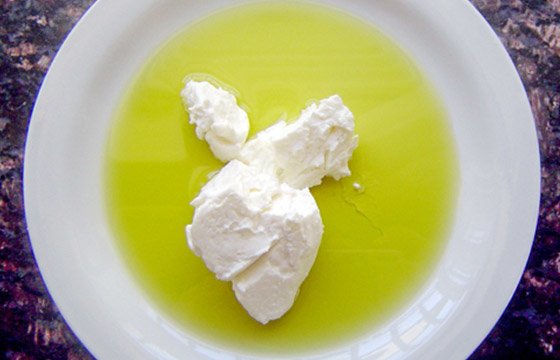
Here's more proof that Middle Eastern food is worth eating more often. Labneh is produced by draining full-fat yogurt for several hours, where it thickens and gets deliciously tangy. As with Greek yogurt, this cultured delight is plush with high-quality protein to keep your muscles happy.
Jazzed up with some fresh herbs, lemon zest, and olive oil, labneh makes for a near-perfect dip. Or give peanut butter a break and spread labneh on your morning toast. Look for labneh at Middle Eastern markets, or let Google guide you toward recipes for easy-to-prepare homemade versions.
Labneh
LABNEH

4
 GOAT MILK


Thankfully, tangy goat milk is finally getting a chance to show its horns. When Spanish researchers compared the nutritionals of cow and goat milk from animals raised under very similar conditions, they found the latter contained more heart-healthy omega-3 fats, the bone-building trio of calcium, phosphorus and magnesium, and conjugated linoleic acid (CLA). The unsaturated fat CLA may play a role in promoting a better buff-to-blubber ratio.
What's more, goat milk is less likely to tousle the tummy than its moo counterpart since it has smaller fat globules that don't clump together, as well as very low levels of the allergenic casein protein, alpha-S1. To date, goats are not permitted to be injected with sketchy synthetic bovine growth hormones commonly used in large-scale cow milk production. Really, anywhere cow's milk goes—such as protein shakes, pancakes, or a bowl of cereal—so too can the goat version.

5
 QUARK

Made by warming sour milk until it coagulates and then straining it, quark is a soft, creamy cheese. It's often compared to cottage cheese, but quark has a smoother, more homogenous consistency. Originally hailing from Europe, a mere half-cup of this mild-tasting dairy can contains upward of 12 grams of protein, making it useful for helping to pack on quality lean-body mass.
Quark
QUARK
Low-fat quark has an advantage over cottage cheese in that it often doesn't contain any added salt. Many bodybuilders, in fact, lament the high salt levels present in cottage cheese. Use quark in recipes calling for yogurt, sour cream or mayonnaise. It's especially tasty when mixed with mashed potatoes. You can also stir it with fresh fruit for a muscle-making snack or dessert.
6 Major Mistakes Limiting Your Calf Size


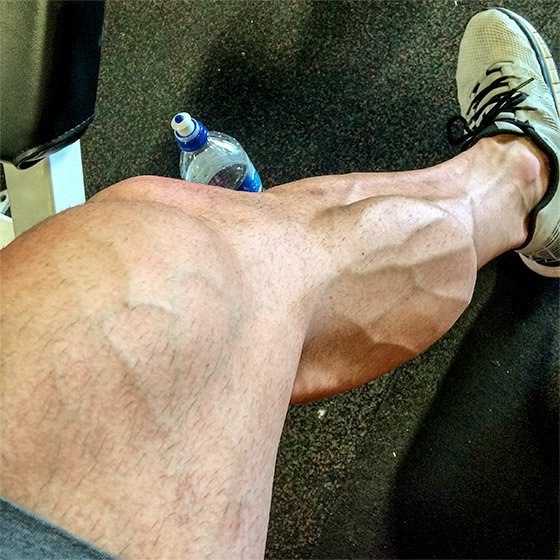
                  6 Major Mistakes Limiting Your Calf Size


Every trainee I know wants a set of nicely developed calves. There is often a disconnect, however, between wanting good calves and actually sporting them.
Very few muscle groups can be as stubborn to grow as your calves, and a constant lack of progress might compel you to stop training your lower legs entirely and put your own calves out to pasture.
However, before you throw in the towel, you should know that your calf-to-cow trouble could be the result of some easily fixed calf-training mistakes.
Yes, there is hope for your lagging gastrocs! Even the skinniest calves can grow into full-blown bulls with the right approach.
Here are six training errors you might be making, and the best way to fix each of them. I've also provided a calf workout that's brought me incredible results.
Read on so you can properly build the burly, cut calves you've always wanted!

MISTAKE 1 DOING CALF EXERCISES AT THE END OF YOUR LEG WORKOUT

Much like the rear delts on shoulder day, calves are often neglected—or saved for the last part of a leg workout, when you're tired and barely able to muster up the energy for a couple of half-assed sets.
As you probably already know, muscles can't grow if they receive subpar training. If you really want to make your calves stand-out, you must start training them the way you train your back or chest: fresh, from every angle, and to complete exhaustion.


If you can start your leg training with calves—and train them with the same intensity as you do your quads and hamstrings—do it. If you're trying to hit your upper legs super-hard and just don't have the energy to do the same to your calves on leg day, add an extra calf day into your split or add the work to a different workout.
Whatever you choose, the point is to ensure that your calves don't suffer from lack of attention.

MISTAKE 2 LIMITING YOURSELF TO THE CONVENTIONAL 10-15 REP RANGE

When training your calves, throw conventional rep ranges out the window. I never do less than 20 reps per set when I train my calves. Usually, I aim for 25-30 reps.
This higher rep range forces you to use a slightly lighter weight, which allows you to fully contract your calves and stimulate new growth. Lots of reps will also mean an awesome pump!

MISTAKE 3 NOT TRAINING THE SOLEUS AND GASTROCNEMIUS EQUALLY

I see a lot of people training their calves in the exact same way at every single workout. If you only do calf exercises sitting or standing, then you're not hitting all portions of your calf muscles equally.
Your calves are made up of several muscles. Your gastrocnemius is the muscle that makes up the inner and outer head of each calf. When you are doing standing calf exercises, the majority of the work is performed by the gastrocnemius muscles.
WHEN MORE MUSCLES GET ACTIVATED, YOU'LL SEE MORE GROWTH.
The soleus, on the other hand, runs directly underneath the gastrocnemius. The soleus muscles are activated when performing calf exercises with your knees bent, like when you do a seated calf raise or calf raises without your legs locked out.
Armed with this knowledge, you can select exercises that will train your entire calf, not just parts of it. When more muscles get activated, you'll see more growth.

MISTAKE 4 USING TOO MUCH WEIGHT

Common calf-training knowledge says you have to train calves heavy to make them grow. I completely agree! However, if you use weight that's so heavy you can't do an exercise properly, you're just robbing yourself of gains.
If you use too much weight, you could start bouncing at the bottom of each rep, or fail to complete the rep with a hard contraction at the top. Too much weight might also make you get assistance from the quads and cheat the weights up.
Not only does this poor form place a ridiculous amount of dynamic stress on your Achilles tendon, vertebrae, and knees, it also cheats your calves of precious stimulation.
Not sure if you're going too heavy? Here are a few ways to tell:
  1. Your ankles get severely out of line with the rest of your leg during any portion of the rep.
  2. You can't perform standing calf raises without bending your knees, or seated calf raises without using your arms to pull the weight up.
  3. You feel pain in the arch of your foot or your Achilles tendon.

MISTAKE 5 FAILING TO ISOLATE AND FULLY CONTRACT YOUR CALVES

YOUR CALVES REAP THE MOST BENEFIT FROM AN EXERCISE WHEN IT'S DONE WITH A FULL CONTRACTION, SLOW NEGATIVE, AND A FULL STRETCH.
Just like any other muscle, your calves reap the most benefit from an exercise when it's done with a full contraction, slow negative, and a full stretch.
Many people like to bounce the weight or just perform partial reps in the middle 50 percent of the range, leaving out the full squeeze at the top.
In my opinion, that hard contraction at the top is where the real growth occurs. Optimize the squeeze you get at the top of each rep by getting up on the balls of your feet and pushing as high up as physically possible.
Once you're at the top, flex the muscle, hard. It takes a conscious effort and mental focus. Those who have tried my arms workout can attest to the enormous difference a big squeeze at the top will make in the efficacy of your workout.
The work isn't over once you've hit that peak contraction. Keep tension on the muscle while you slowly return the weight to the starting position.
Taking your time throughout each rep will increase the amount of time your calves are under tension, even if you're using the same weights and reps you normally do.
At the end of each rep, gently—no ballistic movements—stretch the calf as far as you can without shifting the focus of the stretch from your calf to your Achilles tendon. You want the stress to stay on the target muscle, not your connective tissue.

MISTAKE 6 USING IMPROPER FOOT PLACEMENT

We've all heard that pointing your toes in, out, and straight ahead will hit your calves from various angles. Much of this is true, but only to an extent. It's true that having your feet pointed straight ahead will equally train the inner and outer heads of your calves.
It's also true that having your toes pointed out will shift the focus to the inner heads of your calves, and that having your toes pointed in will shift the focus to the outer heads. That being said, your toes do not need to point out or in more than an inch to change the focus.
Performing calf raises with your toes at extreme angles not only prevents you from achieving maximum calf activation but also places an inordinate amount of stress on the ligaments and connective tissues in your ankles and knees.
For best results, don't play around with your toe angle too much. Mix it up if you wish, butdo notemploy extreme angles. An inch in or out will do just fine.

MY KILLER CALF WORKOUT


Now that you're familiar with some of the most common calf-training mistakes and how to fix them, I want to share my favorite calf workout. I've performed this workout religiously twice per week over the last year and have seen incredible results:


20 BEST PROTEIN PANCAKE RECIPES

Welcome one, welcome all. Your search for the healthy breakfast solution is over, and it's comprised of three words: Healthy protein pancakes. OK, we know what you're thinking.Healthy pancakes? The two words rarely get along in the same sentence—let alone in the same recipe.
Thankfully, times have changed. Gone are the days when the almighty pancake was simply a vessel for delivering the carbohydrates found in seven slices of bread. Now, a generous waterfall of (sugar-free) pancake syrup cascading down a full stack of protein-infused pancakes means satisfying flavor and muscle-building power.
Featuring 20 of our most delicious protein pancakes, these healthy breakfast recipes are sure to appeal to a variety of taste preferences. Blueberry pancakes, pumpkin pancakes, chocolate peanut butter pancakes, or just the simple basics—you'll find it all here and burst into a happy dance after one bite.

1
 BASIC PROTEIN PANCAKES


INGREDIENTS

  • DIRECTIONS

  1. Place raw, uncooked oatmeal in a blender or food processor and blend until it becomes fine flour.
  2. Add eggs, banana, protein powder, and baking powder and pulse blend until smooth.
  3. Toss blueberries into the batter and mix using a spatula or spoon.
  4. Place a skillet on medium-high heat and measure out about 1/8 cup or 2 tbsp of batter per pancake.
  5. Cover the pancakes while they cook to help the inside cook faster. Cook them for about 45 seconds to 1 minute on the first side, and then about 30-45 seconds on the other side.
NUTRITION FACTS
Amount per serving
Calories 544
Total Fat11g
Total Carbs64g
Protein47g

2
 TWO-INGREDIENT PANCAKES


INGREDIENTS
HEALTHY SUGGESTIONS
 
DIRECTIONS
  1. Mash the banana and crack the eggs in it, stirring until the mixture becomes somewhat homogenized.
  2. Heat a greased griddle or frying pan on medium heat and pour about a 2.5-inch wide puddle of batter.
  3. Delicately flip the pancake after about 25 seconds or when it browns. The recipe makes 3-4 small pancakes.
NUTRITION FACTS
Serving Size: 3-4 pancakes
Amount per serving
Calories 215
Total Fat5g
Total Carbs30g
Protein18g


PDF 

3
 FITMENCOOK LEAN PRO8, BANANA, BLUEBERRY,
AND OATMEAL PANCAKES


INGREDIENTS
HEALTHY SUGGESTIONS

DIRECTIONS
  1. Place raw, uncooked oatmeal in a blender or food processor and blend until it becomes fine flour.
  2. Add eggs, banana, protein powder, and baking powder and pulse blend until smooth.
  3. Toss blueberries into the batter and mix using a spatula or spoon.
  4. Place a skillet on medium-high heat and measure out about 1/8 cup or 2 tbsp of batter per pancake.
  5. Cover the pancakes while they cook to help the inside cook faster. Cook them for about 45 seconds to 1 minute on the first side, and then about 30-45 seconds on the other side.
NUTRITION FACTS
Amount per serving
Calories 544
Total Fat11g
Total Carbs64g
Protein47g


PDF 

4
 ALMOND BUTTER PROTEIN PANCAKES


INGREDIENTS
HEALTHY SUGGESTIONS
DIRECTIONS
  1. Mix ingredients in a bowl. If needed, add a bit more water.
  2. Cook over medium heat.
  3. Plate and spread 1 tbsp almond butter on top of the pancakes.
  4. Sprinkle with 1 packet Splenda and drizzle with maple syrup.
  5. If desired, add a few strawberries and bananas for deliciousness!
NUTRITION FACTS
Amount per serving
Calories 145
Total Fat1.3g
Total Carbs3.6g
Protein34.8g


PDF 

5
 PROTEIN POW PROTEIN PANCAKES


INGREDIENTS
HEALTHY SUGGESTIONS
DIRECTIONS
  1. Blend all ingredients together.
  2. Spray a nonstick pan with coconut flour, PAM, or low-calorie spray.
  3. Turn your heat to medium/high.
  4. Once the pan is sizzling hot, pour your batter on it. Then turn the heat back to medium/low to make sure the pancakes cook through without burning.
  5. Flip once bubbles start to appear on the pancake's surface, flip again, and then boom: ready!
NUTRITION FACTS
Amount per serving
Calories 564
Total Fat21g
Total Carbs39g
Protein57g


PDF 

6
 BANANA PANCAKES


INGREDIENTS
HEALTHY SUGGESTIONS
DIRECTIONS
  1. Preheat your pan to 300 degrees.
  2. In a bowl mix eggs, 1/4 cup coconut flakes, 1/2 of a mashed up banana, and 1/2 drop liquid Stevia.
  3. Melt coconut oil in microwave and add to mix.
  4. Stir in flax meal and protein to a desired creamy consistency. Add cinnamon.
  5. Pour on pan and cook a few minutes on each side.
  6. Once all pancakes are made, slice up the remaining 1/2 banana and top the pancakes with zero-calorie maple syrup.
NUTRITION FACTS
Per serving, makes 8 pancakes
Amount per serving
Calories 127
Total Fat6.5g
Total Carbs5.5g
Protein11.7g


PDF 

7
 BERRIES AND CREME PROTEIN PANCAKES


INGREDIENTS
HEALTHY SUGGESTIONS

DIRECTIONS
  1. Mix all ingredients together in a bowl.
  2. Spray a medium-sized skillet with nonstick spray, then place on medium heat.
  3. Pour in batter. Once you see tiny bubbles appear on the top of the pancake, flip.
  4. When each side is golden brown, the pancake is ready to be served. Enjoy!
NUTRITION FACTS
Amount per serving
Calories 280
Total Fat3g
Total Carbs27g
Protein37g


PDF 

8
 BLUEBERRY PANCAKES


INGREDIENTS
HEALTHY SUGGESTIONS
DIRECTIONS
  1. Put egg whites, oats, baking powder, almond milk, salt, and Stevia in the blender.
  2. Blend for 30 seconds on med-high speed.
  3. Spray a pan with non-stick cooking spray, pour batter on pan, and add half the blueberries.
  4. Cook like a regular pancake.
  5. For topping, add applesauce and cinnamon.
NUTRITION FACTS
Per serving, makes 2 pancakes
Amount per serving
Calories 334
Total Fat4g
Total Carbs48g
Protein30g


PDF 

9
 CHOCOLATE PEANUT BUTTER PANCAKES


INGREDIENTS
HEALTHY SUGGESTIONS

DIRECTIONS
  1. Mix all ingredients in a bowl until they form a thick batter.
  2. Pour batter onto a greased skillet and cook like a pancake.
  3. Top with all-natural peanut butter or sugar-free maple syrup.
NUTRITION FACTS
Amount per serving
Calories 342
Total Fat17g
Total Carbs25g
Protein47g


PDF 

10
 CINNAMON SWIRL PUMPKIN PIE PROTEIN
PANCAKES


INGREDIENTS
HEALTHY SUGGESTIONS

DIRECTIONS
  1. Mix all ingredients together in a bowl.
  2. Spray a medium-sized skillet with nonstick spray, then place on medium heat.
  3. Pour in batter. Once you see tiny bubbles appear on the top of the pancake, flip.
  4. When each side is golden brown, the pancake is ready to be served. Enjoy!
  5. Feel free to top with sugar-free syrup. Walden Farms Calorie-Free Pancake Syrup is my favorite. (I'm convinced it was created solely to curb my sweet tooth.)
NOTE
Looking for more sweet? Add fruit of your choice! A few banana slices make a good addition, or top it with 1 tbsp of almond butter. Plain or decked out—this pancake is delicious!
NUTRITION FACTS
Amount per serving
Calories 369
Total Fat4g
Total Carbs40g
Protein43g


PDF 

11
 COMBAT PANCAKES


INGREDIENTS
HEALTHY SUGGESTIONS
DIRECTIONS
  1. Mix together all ingredients until you achieve a pancake-like consistency.
  2. Preheat a pan over medium heat, then spray pan with non-stick spray.
  3. Place mix into pan and cook both sides until mix is fully cooked through. Test with a toothpick.
NUTRITION FACTS
Per serving, makes 2 pancakes
Amount per serving
Calories 238
Total Fat4g
Total Carbs19g
Protein32g


PDF 

12
 LEMON BLUEBERRY PANCAKES


INGREDIENTS
HEALTHY SUGGESTIONS

DIRECTIONS
  1. In a large bowl, combine all ingredients. Mix together and whisk until smooth.
  2. Cook batches in pre-sprayed skillet on medium high temperature until bubbles form on the surface, then turn over and cook until dark golden brown.
  3. Serve with sugar-free syrup.
NUTRITION FACTS
Amount per serving
Calories 510
Total Fat16g
Total Carbs26g
Protein50g


PDF 

13
 KEFIR PANCAKES


INGREDIENTS
HEALTHY SUGGESTIONS

DIRECTIONS
  1. In a large bowl, mix flour, oat flour, baking soda and salt. In another bowl, combine together the kefir, milk, vanilla extract and eggs; beat until well-blended. Next, add the dry mixture to the wet mixture until a moist batter has formed.
  2. Pre-heat a skillet on medium heat and spray with non-stick cooking spray. Drop the batter onto the skillet by large tablespoon and cook for 1-2 minutes before flipping and cooking for another minute or two on the second side. Continue until all pancakes are completed.
  3. Place the natural peanut butter in the microwave for 20-30 seconds to soften and then drizzle over pancakes; top pancakes with the fresh berries.
NUTRITION FACTS
Per serving, makes 2-3 pancakes
Amount per serving
Calories 584
Total Fat15g
Total Carbs81g
Protein28g


PDF 

14
 MONSTER MILK BREAKFAST CAKE


INGREDIENTS
HEALTHY SUGGESTIONS
DIRECTIONS
  1. Mix all ingredients together in a bowl.
  2. Cook in a microwave for 1-2 minutes or until all the liquid is absorbed by the oats.
  3. Top with all-natural peanut or almond butter, or sugar-free maple syrup.
NUTRITION FACTS
Amount per serving
Calories 295
Total Fat15g
Total Carbs32g
Protein31g


PDF 

15
 OATMEAL PANCAKES


INGREDIENTS
HEALTHY SUGGESTIONS

DIRECTIONS
  1. Place all ingredients in a blender and blend for 30 seconds.
  2. Then pour onto a hot grill and cook like a normal pancake.
  3. An optional addition is to add some frozen fruit after the batter is blended.
NUTRITION FACTS
Serving Size: 1 serving
Amount per serving
Calories 465
Total Fat8g
Total Carbs57g
Protein45g


PDF 

16
 PUMPKIN SPICE PANCAKES BY JAMIE EASON


INGREDIENTS
HEALTHY SUGGESTIONS

DIRECTIONS
  1. Preheat griddle to medium heat.
  2. Mix oat flour, Splenda, baking powder, salt, cinnamon, allspice and nutmeg in a bowl.
  3. Whisk egg whites and pumpkin. Mix in Almond Breeze.
  4. Add wet ingredients to dry ingredients and mix together.
  5. Spray griddle with non-stick butter spray.
  6. Scoop batter with a 1/4 cup measuring cup onto griddle. Cook 3-5 minutes on a side.
NOTE
To make these protein pancakes, use only 1 1/4 cup of oat flour and add 2 scoops of your favorite vanilla protein.
NUTRITION FACTS
Per serving, makes 10 pancakes
Amount per serving
Calories 64
Total Fat1g
Total Carbs10g
Protein4g


PDF 

17
 PUMPKIN PROTEIN PANCAKES


INGREDIENTS
HEALTHY SUGGESTIONS

DIRECTIONS
  1. Mix canned pumpkin, liquid egg whites, and MET-Rx protein powder together with a spatula. (Mix by hand for a slightly lumpy batter or, if you prefer, use a blender to achieve a smoother consistency.)
  2. Stir in the baking powder.
  3. Continue to stir as you add in the pumpkin spice. Add as little or as much as you like—even add a little natural sweetener such as Stevia or honey if you want.
  4. Slowly add water. Start with 1/4 cup and add from there. Just be sure to keep the batter thick! 6. Pause for a second and taste test this awesomeness. Get excited to cook it!
  5. Turn your stove on medium heat. Pour in the batter (it should be thick) and let cook for about 3 minutes.
  6. Flip your perfectly pleasant protein pancake, and lower the heat a little bit. Cook until desired fluffiness, and let cool. Top with Walden Farm's Calorie Free Pancake Syrup, or your favorite toppings of choice!
NUTRITION FACTS
Amount per serving
Calories 136
Total Fat2g
Total Carbs10g
Protein23g


PDF 

18
 RED VELVET MUSCLE MILK PANCAKES


INGREDIENTS
HEALTHY SUGGESTIONS

DIRECTIONS
  1. Heat greased skillet on medium heat.
  2. Combine all ingredients until batter is smooth.
  3. Pour into heated skillet.
  4. Once bubbles form and one side is golden brown underneath, flip pancake.
  5. Cook on other side until golden brown.
  6. Serve with butter or cream cheese whipped withagave nectar.
NUTRITION FACTS
Amount per serving
Calories 326
Total Fat3.7g
Total Carbs48g
Protein24g


PDF 

19
 VANILLA CARAMEL PROTEIN CREPE


INGREDIENTS
HEALTHY SUGGESTIONS

DIRECTIONS
  1. In a blender, combine egg whites, almond milk, oats, protein powder, salt and coconut oil. Process until smooth, cover and refrigerate for 1 hour.
  2. Heat skillet over medium heat and spray with pam. Pout 1/4 cup of crepe batter into skillet, tilting to completely coat the surface. Cook for 2-5 minutes, turning once, until golden. Repeat with remaining batter.
  3. Top the crepe with 1 tablespoon of Nutella and 1/2 banana sliced and roll.
NUTRITION FACTS
Amount per serving
Calories 510
Total Fat16g
Total Carbs26g
Protein50g


PDF 

20
 SPROUTED BUCKWHEAT PUMPKIN PANCAKES


INGREDIENTS
HEALTHY SUGGESTIONS

DIRECTIONS
  1. Combine the first five ingredients. Then, add the egg whites and almond milk. You can also make these your own by adding favorites like blueberries, chocolate chips, crushed walnuts, canned pumpkin, and mashed bananas to the mixture.
  2. Cook on a griddle greased with a bit of coconut oil.
  3. Top with optional garnish such as almond butter, jelly, coconut butter, coconut oil, or pure maple syrup. Enjoy!
NUTRITION FACTS
Per pancake
Amount per serving
Calories 89
Total Fat1g
Total Carbs17g
Protein5g